Fleeing to free Ukraine

How young Ukrainians escape Russian occupation — often against their families’ wishes

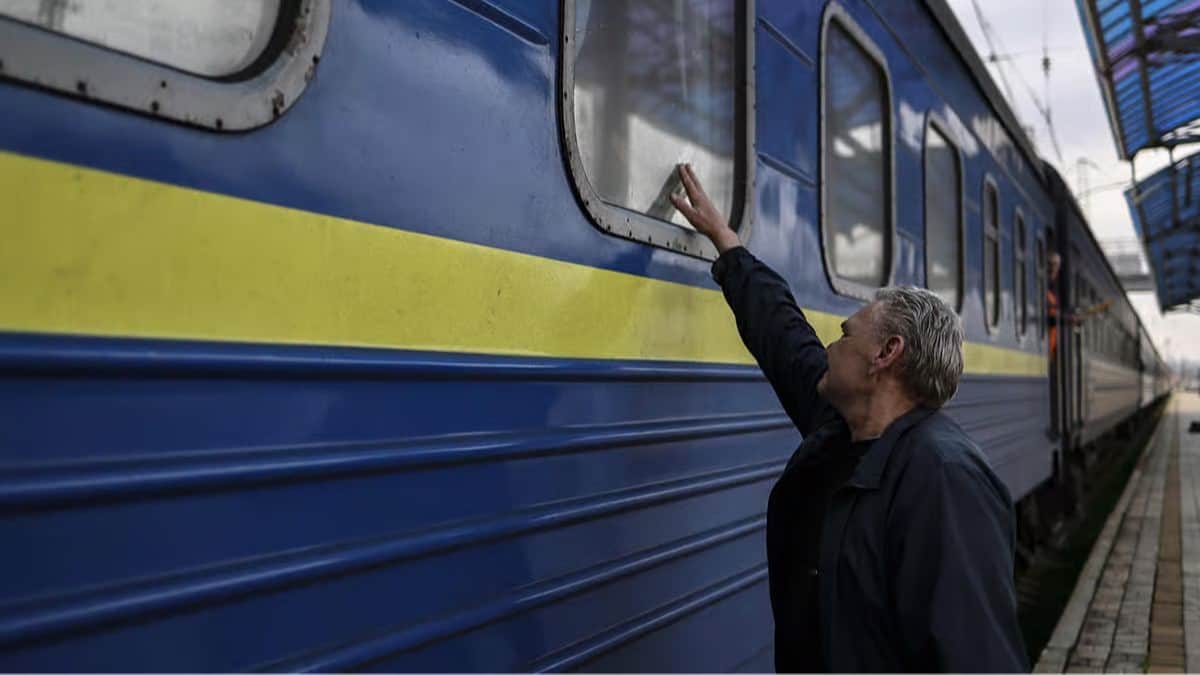
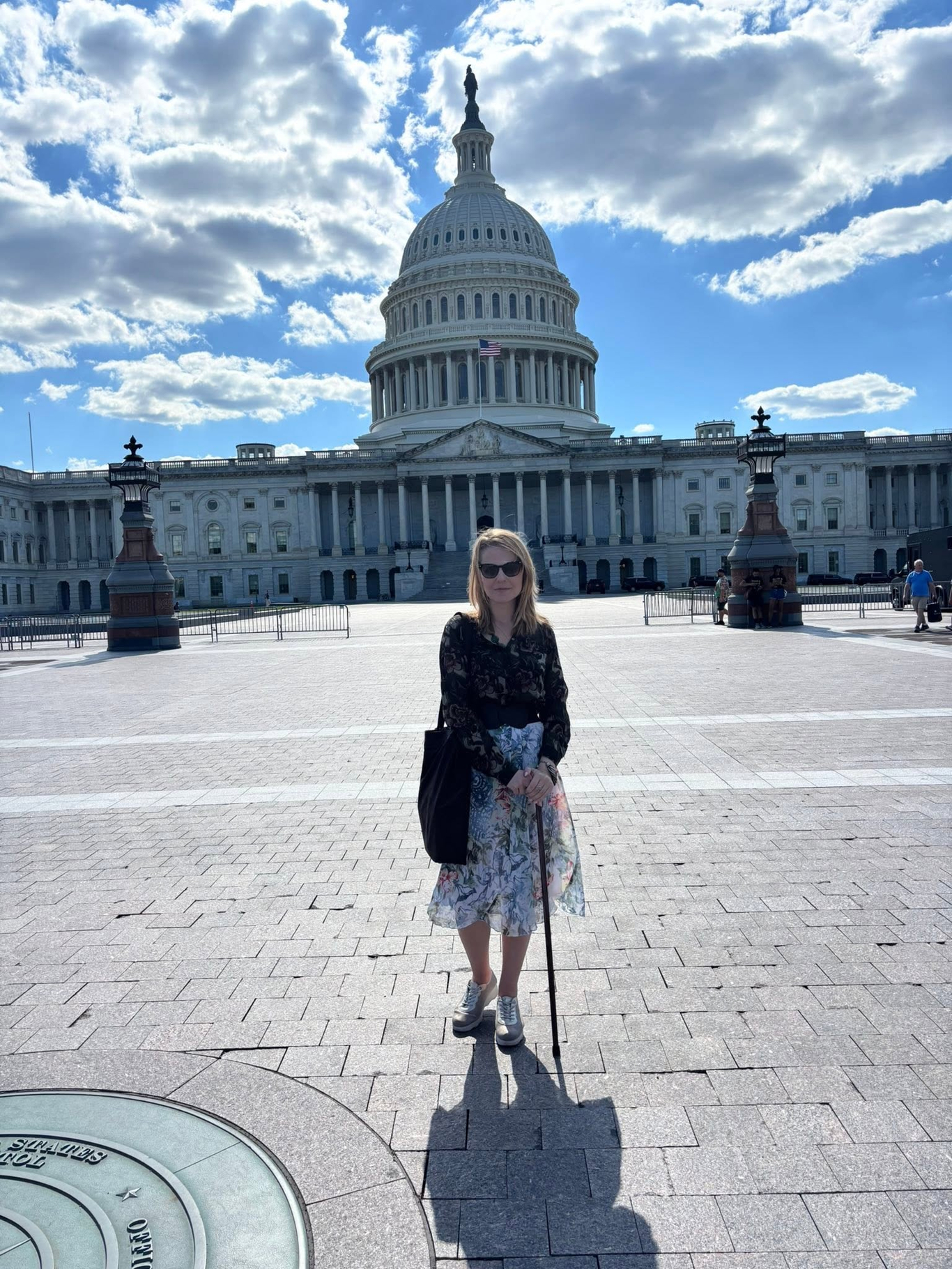
Thousands of Ukrainians are currently living under Russian occupation — including an untold number of young people who want to escape. Dina Urich is part of a group of volunteers working to evacuate people safely, often against their families’ wishes. In the summer of 2022, in conditions of active combat, her team managed to evacuate 16,000 civilians from the occupied Kharkiv region in a span of three months. She then went on to help residents of the Donetsk, Luhansk, Zaporizhzhia, and Kherson regions, as well as Crimea, overseeing evacuations with an organisation called Helping to Leave. In 2025, after stepping away for six months due to an illness, she helped found a new charity, Plakhta, and turned her focus to helping Ukrainian teenagers and young people leave the occupied territories for free Ukraine. Ukrainian news outlet Novosti Donbassa spoke to Dina about the challenges and rewards of the work she does. Novaya Gazeta Europe shares an abridged translation of that story.
‘The Russians don’t want to let them go’

Dina doesn’t say much about herself. Before the start of the full-scale war, she worked in a neuroscience lab. In 2018, she became disabled and had to undergo several major surgeries and rehab. When that was finished, she decided to pursue a master’s degree in social work.

“As it turned out, instead of studying the theory, I ended up doing the practice, because the full-scale invasion began, and I went to work as a volunteer,” she tells Veter.

Before the war, Dina had lived in Spain for years. On 24 February 2022, she was at a hospital in Barcelona for a round of medical procedures. She had many close friends in Ukraine, including one with relatives in Mariupol, which was quickly encircled by Russian forces in the invasion’s first weeks. Together, they tried to figure out how to get her friend’s family out of a city doomed to destruction. Today, Dina looks back on that mission as her first rescue operation.

“And then there were others,” she recounts.

“In 2022, my team and I organised a corridor across the Pechenihy dam out of the occupied parts of the Kharkiv region, building it almost from scratch. We put together convoys online, found drivers, set meeting points. We worked closely with the Ministry of Reintegration of the Temporarily Occupied Territories and with local Kharkiv charities that received people once they got out.”

The hardest part, Dina says, was the lack of communication, as Russian forces were jamming the airwaves. This forced her and the other volunteers to rebuild communications chains to pass information inside the occupied areas.

“No one ever really has experience for this kind of thing,” Dina explains. “We just improvise, because there was a problem and there were people who needed help.

“Actually, it’s much the same now, with the young people who want to leave the temporarily occupied territories. The Russians don’t want to let them go — they check their phones for contact with Ukraine, for political views, for any communication with Ukrainian volunteers. That’s a real risk. We have to think through every detail so the occupiers never find out.”
‘So good it must be a scam’

Over the last four and a half years, Dina says, it’s become progressively harder to evacuate people as the occupation authorities have continually introduced new restrictions and requirements. In 2022, adults could leave with copied documents, and children could be taken out with handwritten authorisations from parents. Now that’s simply impossible — only original documents will do. Without a Russian passport, it’s virtually impossible to get through checkpoints, let alone cross the Russian border. This means that people who refused for years, on principle, to take documents from occupation authorities are now forced to do so just to get out.

Especially troubling, she said, is how much the psychological state of Ukrainians in the occupied zones has deteriorated after being cut off from reliable information for years.

“The atmosphere is such that everyone suspects everyone else and no one trusts anyone, because people are afraid of being informed on,” Dina says. “People lose trust in the world and in any information they receive. Sometimes it’s very hard to convince them that once they reach government-controlled territory, we’ll actually be able to help. Or if we offer to fund someone’s relocation, some of them say, ‘What you’re describing sounds so good it must be a scam.’”

On top of that, every year the journey out of the occupied territories demands more resources — more time to prepare, more money, more information, and more knowledge of how to handle different situations along the way.

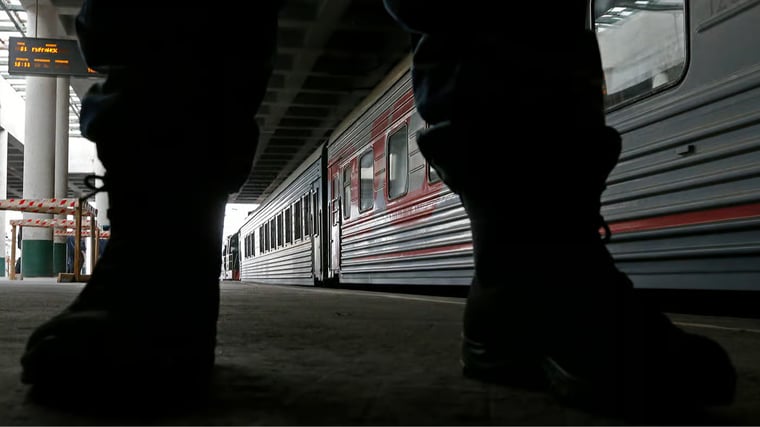
Dina says that in 2022, when evacuation corridors ran across the front line, the whole trip, from the decision to leave to arrival in government-controlled territory, sometimes just took a few hours. Now there are no direct frontline corridors, and people must travel through Russia and third countries. Going through Russia and Belarus to the only functioning humanitarian corridor, the Mokrany–Domanove crossing on the Belarus–Ukraine border, takes two to three days at best. People have to travel by bus and train and find their own places to sleep along the way.

‘A single mistake could have cost him his freedom’

Despite the challenges, Dina says, there are hundreds and perhaps thousands of young people who have barely lived in independent Ukraine but who are determined to escape occupation. When Crimea and part of Donbas fell under occupation in 2014, these people were no older than six to ten. In most cases, their parents are either pro-Russian or avoid political topics altogether for safety’s sake. And yet, in many cases, children who were raised on propaganda textbooks and who have never heard the Ukrainian language spoken around them suddenly discover a Ukrainian identity of their own.

A woman named Polina from Crimea, for example, has publicly told her story of reaching government-controlled territory and joining the Armed Forces of Ukraine. So has her fellow Crimean Bohdan, whom the occupation authorities tried to mobilise at 18; he fled and spent two years hiding inside Russia. In 2025, Bohdan learned about the existence of a corridor and that he could return to Ukraine without even a Ukrainian passport.

Dina describes how Bohdan reached out to volunteers and was eventually brought home under the Ukrainian president’s Bring Kids Back UA initiative.

“Because of the checkpoints, the inspections, and the risk of detention over mobilisation, getting him out took careful planning — a single mistake could have cost him his freedom. But it all worked out. Bohdan is in Kyiv now, getting the help he needs,” Dina says.

Back in 2023, she adds, a 16-year-old could still leave without their parents’ consent. Now, however, those under 18 need notarised parental permission for the occupation authorities to let them through. “So teenagers wait until their 18th birthday,” she says.

“If you look at the dates people cross the border, you’ll sometimes see someone’s birthday was the 5th and they crossed on the 7th. That means everything was already planned and prepared — the person reached out to volunteers in advance, got advice, and together we waited until they turned 18.”
Making contact

Young people continue to leave from every occupied Ukrainian territory. Dina herself focuses on those from the Donetsk and Luhansk regions and Crimea, as well as the parts of the Kherson and Zaporizhzhia regions occupied in 2022. She says beneficiaries — the volunteers’ term for those they help — find specific organisations not just through word of mouth but through contact information published in official sources, social media posts, and interviews given by people who already made it out, so official outreach works very well.

Dina sometimes finds young people herself in Telegram chats where people discuss leaving the occupied territories, look for drivers, and trade advice on paperwork.

“I reach out to them first myself, and then our team keeps up the conversation, so the person isn’t left alone with their problem,” she explains. “A lot of them don’t even know there are people and organisations that can help — and that can even pay for the trip. the occupiers do everything they can to keep that kind of information from reaching people in the occupied territories.”

But the information does get through, and young people do come back. Just before New Year’s 2026, a 20-year-old from Simferopol whose name is also Bohdan made it to government-controlled Ukrainian territory. He’d been dreaming of it and looking for a way out since he was 16.

“Once I asked an AI for advice, and it sent me a link to a Telegram channel,” he tells Novosti Donbassa. “There I found a link to a chat where people were discussing how to get out of the occupation zone into Ukraine and sharing their experiences. That’s where I found volunteers and got in touch with Dina, and she helped me a lot.”

With her support, a 24-year-old woman from Donetsk named Diana arrived in Kyiv just recently, in March 2026. Diana said she first got the idea when she saw a YouTube video in December 2025 of a girl from Luhansk describing how she’d left through a humanitarian corridor via Belgorod:

“I started looking on Telegram for the right group, and it said the humanitarian corridor was closed. But there was a link there to a group for people leaving through the Mokrany–Domanove crossing point. I wrote in with my story — first I ran into commercial drivers, but after my next message two volunteers answered, one of them Dina. They told me it was possible and that I qualified for a free evacuation because of my age. We made a plan, and starting in December I began getting ready to leave.”
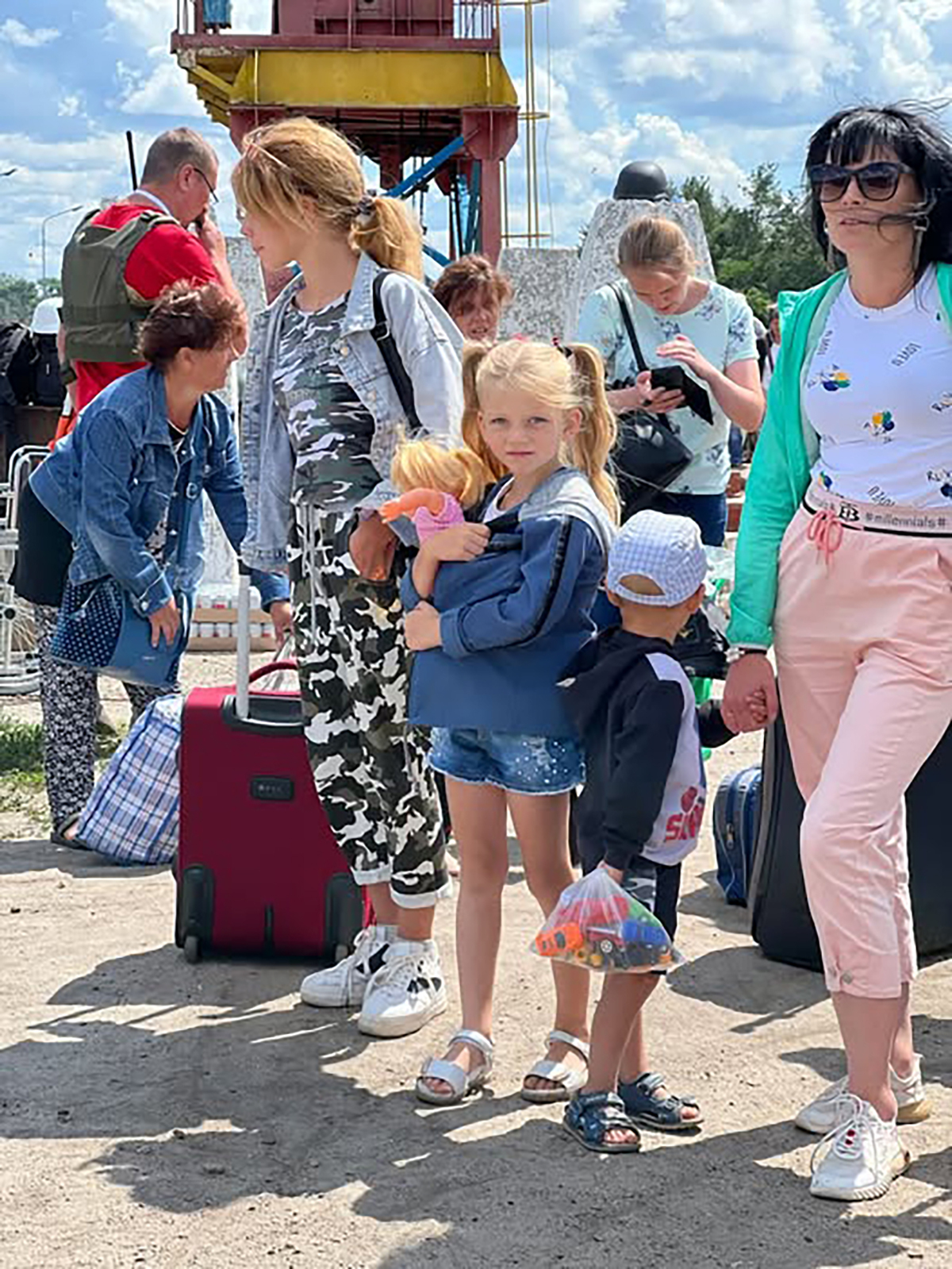
All of the young people Dina has helped considered themselves Ukrainian, despite growing up under Russian occupation. Many of them taught themselves Ukrainian on their own using resources like YouTube. When they set out to escape, they know they’re heading into danger and that they’ll have to start almost from zero.

But what frightens many of them most of all is the lack of Ukrainian documents, and the long, complicated road to getting them. Dina likens this process to two “circles of hell”.

“The first [circle] is getting a return permit to cross the state border, which is issued by Ukraine’s diplomatic missions abroad,” she says. People who take the recommended route through Belarus apply to the Ukrainian consulate in Minsk and can get the document within days or weeks. Those who leave through third countries such as Armenia, Georgia, Kazakhstan, Moldova, and Türkiye apply at consulates there, and the process takes far longer. Because of the many official checks involved, people can get stuck for months or even years.

The second stage begins once someone is already inside Ukraine: getting a citizen’s passport for the first time, after coming of age.

“It’s a real ordeal to be a young man or woman whose only Ukrainian document is a birth certificate — which, as a rule, has no photograph on it,” Dina says.

“So it turns into a quest to prove your own identity, and by law the circle of people who can serve as witnesses is limited mostly to close relatives. And those are almost always the very people whose wishes the young person defied by leaving the occupied territory.”

‘No matter what, they remain Ukrainians’

Little by little, things are changing for the better. On 25 December 2025, the Ukrainian government adopted Resolution No. 1709, which introduces a procedure for identity verification abroad, making it easier to obtain a return document. A one-time payment of 50,000 hryvnias (€980), introduced in June 2025 by the Social Policy Ministry for children returning after deportation, was extended as of 1 October to young people aged 18–23. Support for young people up to age 23 is also provided through the president’s Bring Kids Back UA initiative.

Dina says none of the people she’s worked with have ever expressed regret over their decision to leave the occupied territories because of the difficulties it entailed. “When young people decide to come to Ukraine, they usually know exactly what awaits them. The real problem is that because of all these obstacles, some of the people who want to leave the occupied territories don’t. And we lose them.”

Despite the occupation authorities’ tightening restrictions, Dina and her fellow volunteers are already bracing themselves for the next wave of young people — those from territories occupied starting in 2022.

“And they will leave — those who weren’t even 14 yet when the full-scale invasion began,” Dina says. “We have to help them however we can, because no matter what, they remain Ukrainians, and they want to be in their own country.

“You know, a lot of the people who’ve made it out come back to us to become volunteers themselves, to help others through the first hard days after their return. And that’s wonderful. Their stories give me such joy that I just keep going — I can’t stop. And that, really, is the answer to why I do this work, and why it’s young people, especially, that I care about.”
Share